Friday, March 22, 2013

Magnets, magnets, magnets


The wire part of the fly swatter is magnetic.
Finishing up our force and motion unit, we discovered all about magnets. First I just let students discover around the classroom with magnets. Sometimes they just need to discover by themselves and then make conclusions using that information. Students were highly engaged and lots of science talk was going on.
The top of the clipboard is magnetic.


Staples - this could be a quick way to clean up around the classroom.


Next, the question posed was - Does a magnet have to touch an object to attract it?
Students moved through different stations - cardboard, paper, water, plastic,and foam. They used magents to see which objects could move through various materials. 


Thursday, March 7, 2013

Sea World Field Trip

We are so lucky to be able to take our second graders to Sea World each year. We start our Sea World unit the week before we go and then continue the week after. Students LOVE to learn all about the different animals.
We did a blubber experiment - students had one hand in icy water and one hand in a blubber mitten in icy water. They quickly saw how it was necessary for the animals to have a layer of blubber.
We did a baleen krill experiment - combs with rice - to show how baleen whales filter their food rather than the toothed whales.
We measured dolphin, killer whale, and blue whale lengths. Blue whales can measure about 90 feet.

Our class favorites at Sea World were the beluga whales, the dolphin show, and of course Clyde and Seymore Show.  Students were able to touch and feed stingrays as well as feed the Seals.


Dolphin Nursery
Touching the Stingrays


Dolphin Cove
Waiting for the Show


Thursday, February 28, 2013

STEM - float your boat

Students were so excited about our last STEM activity that we did another shortly after.  Students were given a 10 x 10 piece of foil. They had to create a boat that would be able to hold as many pennies as possible. Students came up with several designs.


Wide base, with tall sides worked well.

This one had two different sides so when the coins were added they were alternated to the sides to balance. Seemed to be a little too small as it did not hold many pennies.

Tuesday, February 26, 2013

Egg Bungee Drop

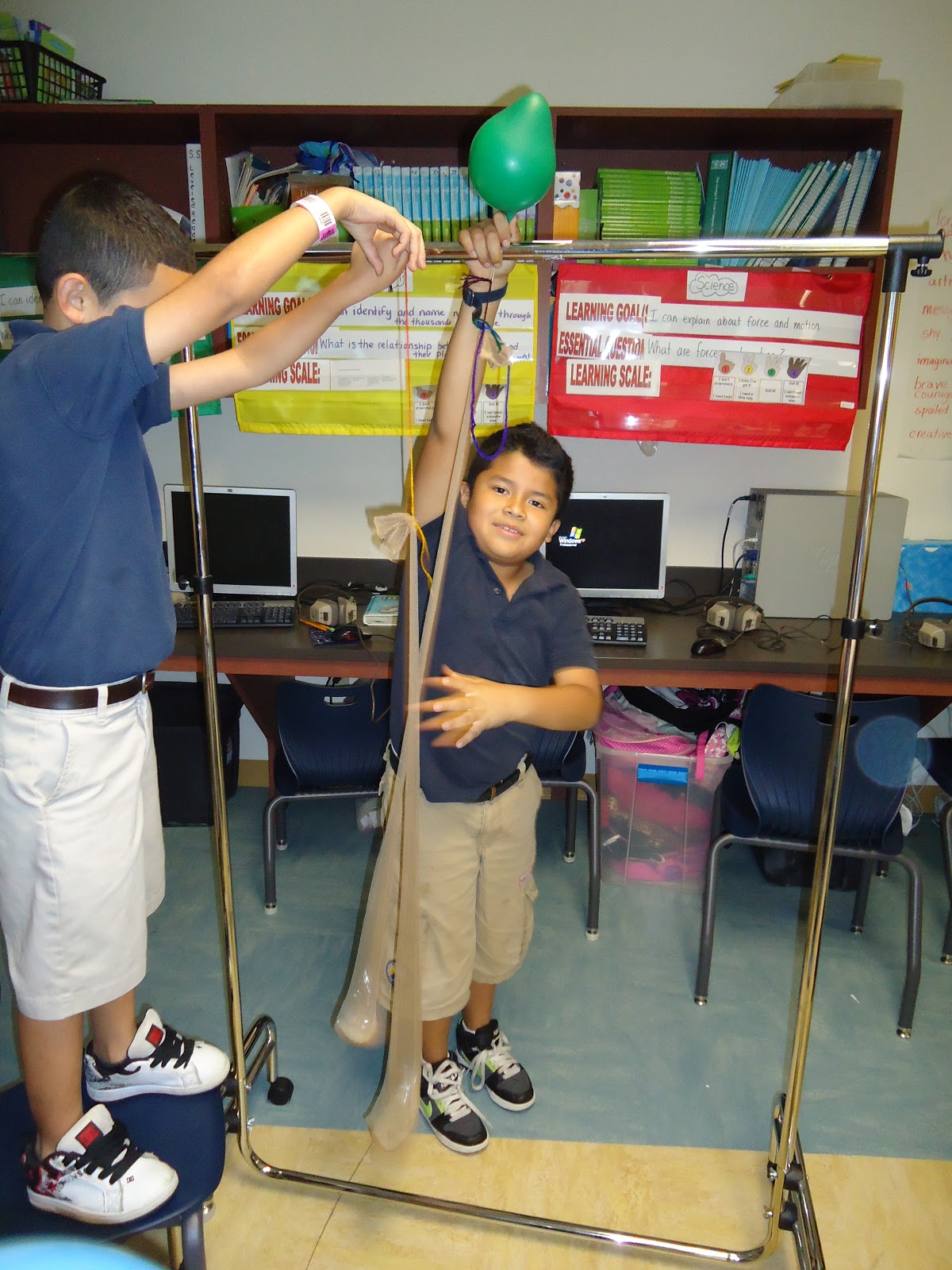
Today students did their very first STEM activity. They were given the task of creating an egg bungee jump where it had to be dropped from five feet and had to come within two inches of the floor without touching it. Students were given a stocking, yarn, rubber band, and a balloon. First they had to work with their team and come up with a design/plan. Students were first given a bag of rice that weighed the same as an egg until they were ready to test in front of the class.

yeah - a winner!

Students tested it and the redesigned as necessary.
Lots of discussions and debating going on - love it!! 

This was definitely a high engagement activity.

Monday, February 25, 2013

Ramp Races

We are now in our force and motion unit. Today we did ramp races. We were trying to determine if the height of the ramp changed the speed and distance of a toy car. Students started out with the height of one book and worked up to four books.


We found out that cars did go faster and a further distance with a higher ramp. We tried to do more books, but found that it came to a point where the angle was too great and the car actually slowed down because there was not a smooth connection to the floor.

Monday, February 4, 2013

Science Fair

Science Fair - We decided to check which kind of cup would keep our drink the coldest, the longest. We live in Florida so cool drinks are a must!!


We tested to see if plastic, paper, or styrofoam cups kept the water the coldest, the longest. Our hypothesis was that the styrofoam cup would keep it coldest, the longest. Our experiment supported our hypothesis.

We ended up winning the school fair for second grade.


Friday, February 1, 2013

100th Day of School

Today was the 100th day of school. We celebrated during our math time with 100 day activities.

100 cup structures. Second picture shows how it got moved to the carpeted area - lots of noise of plastic cups falling. Quickly moved after first round.


Hershey kiss hunt - 100 kisses hidden around the room marked with numbers starting at 10, skip couting by 10s all the way to 1,000. Two missing kisses at the end - not bad!!


Monday, January 21, 2013

Door decorating contest

In art class students read "A Bad Case of Stripes" and made individual faces with patterns and lines. We decided to add a large version to our door.

Monday, January 7, 2013

Plant Projects

We have been studying plants. Our culminating project was to create a 3D plant with the plant parts labeled. Students had to present to the classroom, explain what they used, tell their favorite part, explain one plant part, and answer two questions posed from the audience. I am always amazed at the totally different projects that come from this.


Sunday, October 14, 2012

Bat Webquest

This week we are starting a unit on bats. Here is the link:

Bat Webquest

Friday, October 5, 2012

Rocks and Soil Unit

For the past three weeks we have been working on our rocks and soil unit. First, we looked at different rocks and saw that they can be classified based on size, color, shape, and texture. We watched a movie, read several books, and completed our science workbooks. Students took the information that they learned to make a circle map.

Next we moved onto soil. Students observed different kinds of soil. We discussed how each soil holds water. We found that the best kind of soil for growing plants is humus. We planted a seed in humus, sand and clay. ( We are still watching these as they sit by the window).

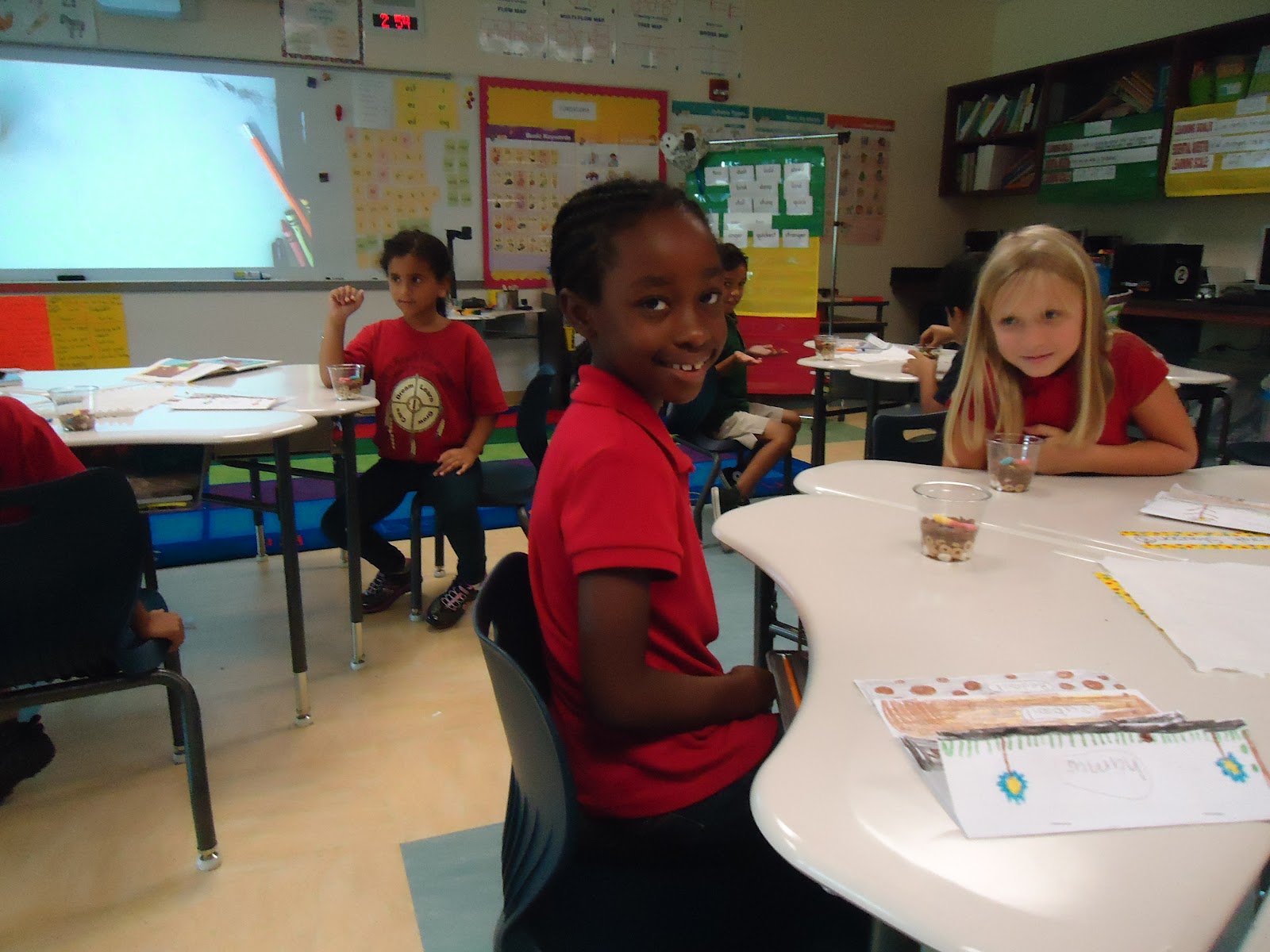
Our last part of the unit involved making a flip book about the different soil layers. Last we made a soil layer snack. We used marshmallows for the bedrock layer, cheerios for the subsoil layer, coco krispies for the topsoil and humus. We added mini m&ms for the bugs and a gummy worm to top it off. Students were able to identify the layers from their flip book with the ones in their snack. What a yummy way to finish off rocks and soil!!


Monday, September 17, 2012

Science Stations

Science Stations

Students used measuring tape to measure things that were round like their wrists, their heads, and their arms. They also used rulers to measure crayon boxes and pencils.


We used thermometers to measure two cups of water. One was cold and one was room temperature. The cold water measured 40 degrees and the warm one was 70 degrees.

We used pan balances to measure mass of objects. The marker was heavier than the paper clip. The glue stick was lighter than the scissors.


Students used measuring tapes to measure and compare the size of their heads.

Students used a hand lens to observe tadpoles.They could also observe rocks and feathers using the hand lens or the magnifying box.


At each station students had to record what they observed or measured and draw a picture.

Students thought it was fun!

Friday, September 7, 2012

Fundations

New to second grade is Fundations. Fortunately the students did this program last year so they are the experts. This is a program that is funded by the Learning Alliance and is part of our "Moonshot Moment" to have at least 90% of third graders on grade level by the end of third grade. It teaches phonics, spelling rules, fluency, vocabulary, and comprehension. We start the day with drill sounds that includes doing all sounds - including digraphs, glued sounds, etc each morning. Students are so well trained that they can actually be the drill leader for the day. This also makes it easy for me to watch the children repeat back and see their mouths making the correct sounds. Next we read trick words - words that cannot be sounded out. We have a variety of activities that we do after that - building words, word of the day, composition, echo find letters and words, make it fun etc. It leaves no room for errors in spelling as the rules are directly taught. Sometimes when we are older we forget why we double the s in miss or why c or k comes at the beginning of a word  - with fundations the rules are explicitly taught.


Students take turn being the drill leaders.


Students are taught the rules for spelling and how words are constructed.
 
 
We (teachers) have overwhelming support from our reading coach and the Learning Alliance.  They are on hand to answer any questions that we may have as we begin this program. 

Science M & M experiment

We have been studying the inquiry skills of a scientist. It's no fun to just listen to what scientists do and how they think, so we actually thought like scientists and did a quick experiment.  We discussed why m & ms melt in your mouth and not in your hand.  What a great discussion!!  There are certainly lots of budding scientists in our room :)


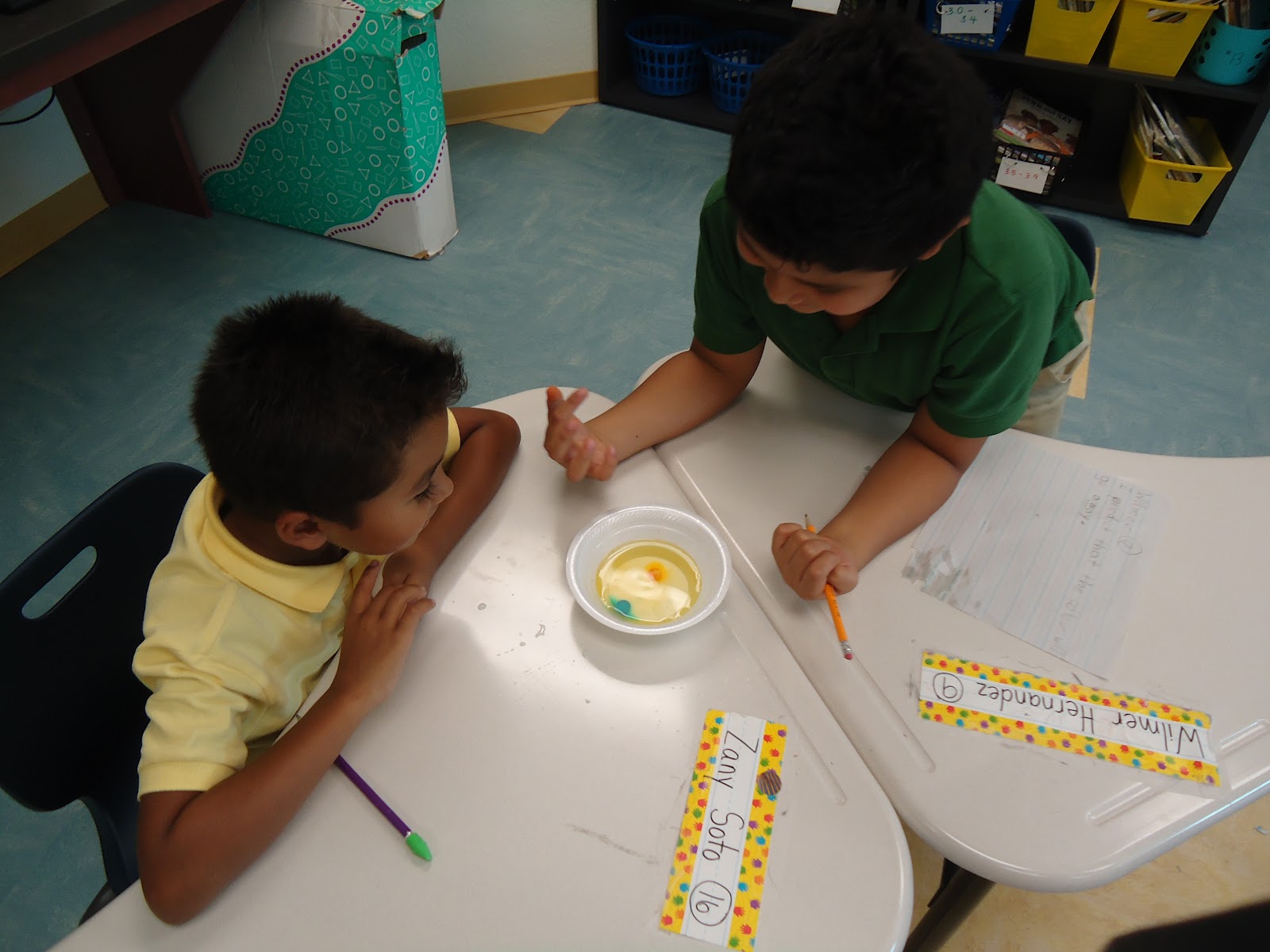
We then predicted what might happen if we place m &ms in water. Students had to write their predictions down. We discussed what might happen to the water?, will we ever see the chocolate?, will the crispy shell fade away? Then each table got different colored m & ms and told to put them in separate areas of the bowl. Students had to note their observations on their science paper. We also walked around and looked at other tables.


Colors are starting to fade.


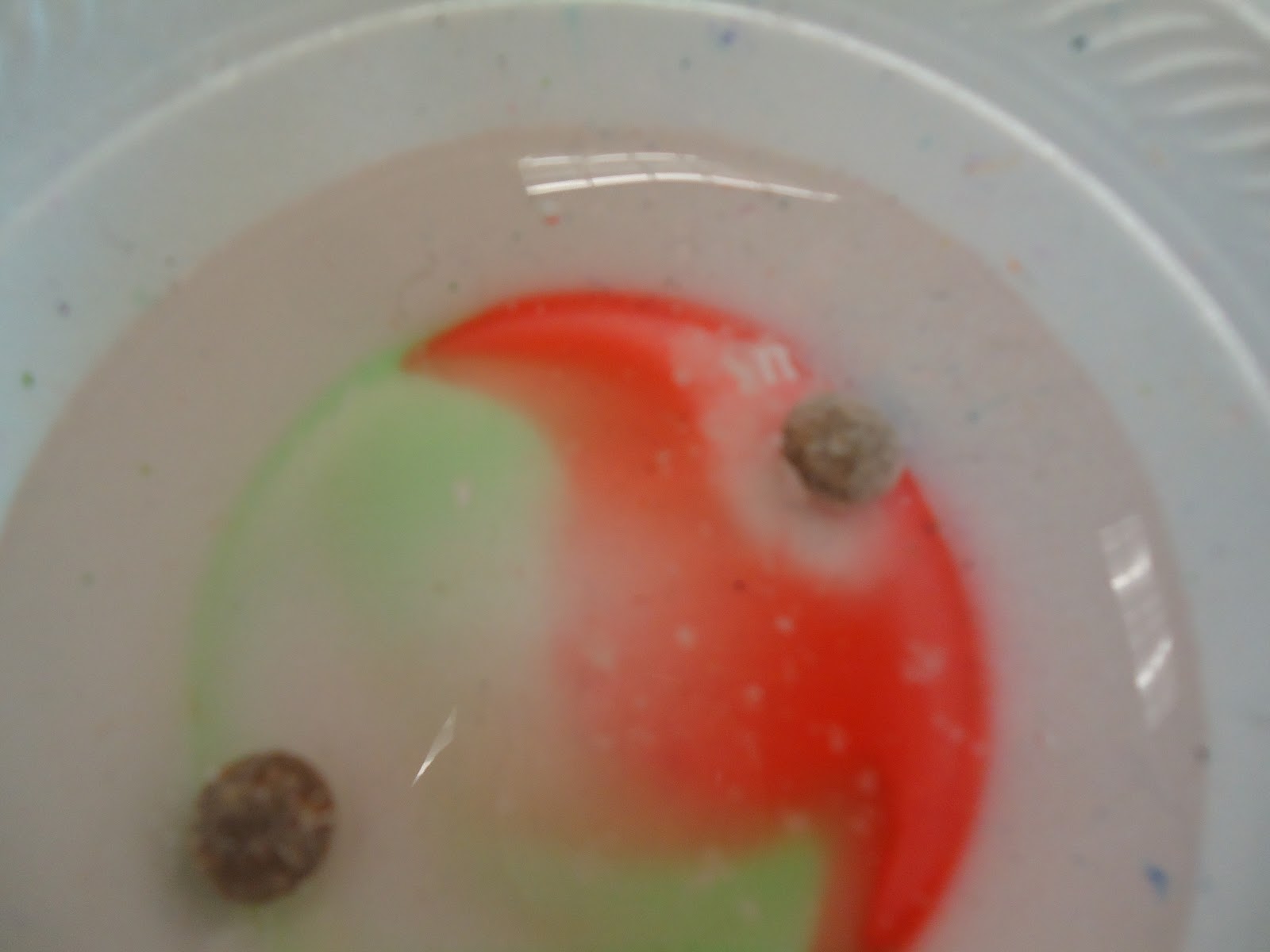
The colors have faded and now the crispy shell is white.


The kids were excited to see the "m" from the crispy shell actually float to the top of the water. Look carefully above the red m & m and you can see the "m" has separated. Now you can see the chocolate.